“As an adjudicated insurrectionist, Trump is an illegitimate president according to Section 3 of the 14th Amendment, and therefore every official act as president will be illegitimate.”
–Mike Zonta, co-editor of OccupySF.net
The 14th Amendment states: “No person shall be a Senator or Representative in Congress, or elector of President and Vice President, or hold any office, civil or military, under the United States, or under any state, who, having previously taken an oath, as a member of Congress, or as an officer of the United States, or as a member of any state legislature, or as an executive or judicial officer of any state, to support the Constitution of the United States, shall have engaged in insurrection or rebellion against the same, or given aid or comfort to the enemies thereof. But Congress may, by a vote of two-thirds of each House, remove such disability.”
Call your Congressperson and your U.S. Senators at (202) 224-3121
The good news, I suppose, is that the mayor of San Francisco has recognized that there’s a housing emergency and tenants are getting evicted. He issued a press release yesterday outlining the steps he’s taking to “address San Francisco’s rent emergency.”
Some of this is just fine: Finding legal counsel for people facing evictions is a demonstrated way to keep tenants in rent-controlled housing. Supporting Sup. Jackie Fielder’s legislation to prevent evictions over less than a month of unpaid rent is kind of a no-brainer. It’s always good to inform tenants of their rights.
But the mayor didn’t even mention the cause of the eviction crisis: the AI boom in San Francisco that he has encouraged and supported. Tech Boom 3.0 has done exactly what the previous two did, and this was entirely predictable: It brought a lot of high-paid people to San Francisco, and gave greedy landlords a huge incentive to force out tenants with below-market rents. When Anthropic and Open AI go public, hundreds of their workers—most of whom are young, single men—will become very rich, and the situation will get even worse.
This will do nothing to promote the mayor’s “family opportunity agenda.”
The element of his “plan” that made me gag was this:
Legislation sponsored by Mayor Lurie will increase by 25%, nearly $3,000 per person, required payments to tenants being displaced under the Ellis Act to reflect the increased cost of finding a new apartment in San Francisco.
For starters, the Ellis Act is an evil piece of legislation that allows speculators to buy up rent-controlled buildings, evict all the tenants (for no cause at all), and flip them as tenancies in common, a form of condos. The threat of an Ellis eviction is often enough to convince a long-term tenant to accept a buy-out—that is, to take a lump-sum payment in exchange for moving out.
If tenants fight the eviction and lose, they get a tiny pittance in statutory transition payments, and the mayor’s proposal will add so little that it’s worth almost nothing. You can’t even pay one month’s rent with $3,000, much less first, last, and security deposit.
Leno’s bill never got out of committee. Back then, the real estate industry owned the state Legislature.
Today, Big Tech has a lot of influence. If Lurie really wanted to protect tenants, he could get his billionaire backers to help fund a massive campaign to overturn the Ellis Act and Costa Hawkins.
Your Power in Action: Take Action on Democracy, Accountability, War Powers, and Civil Liberties
Find actions, volunteer opportunities, and organizations working on democracy, government accountability, immigrant rights, labor rights, reproductive freedom, climate action, and civil liberties.
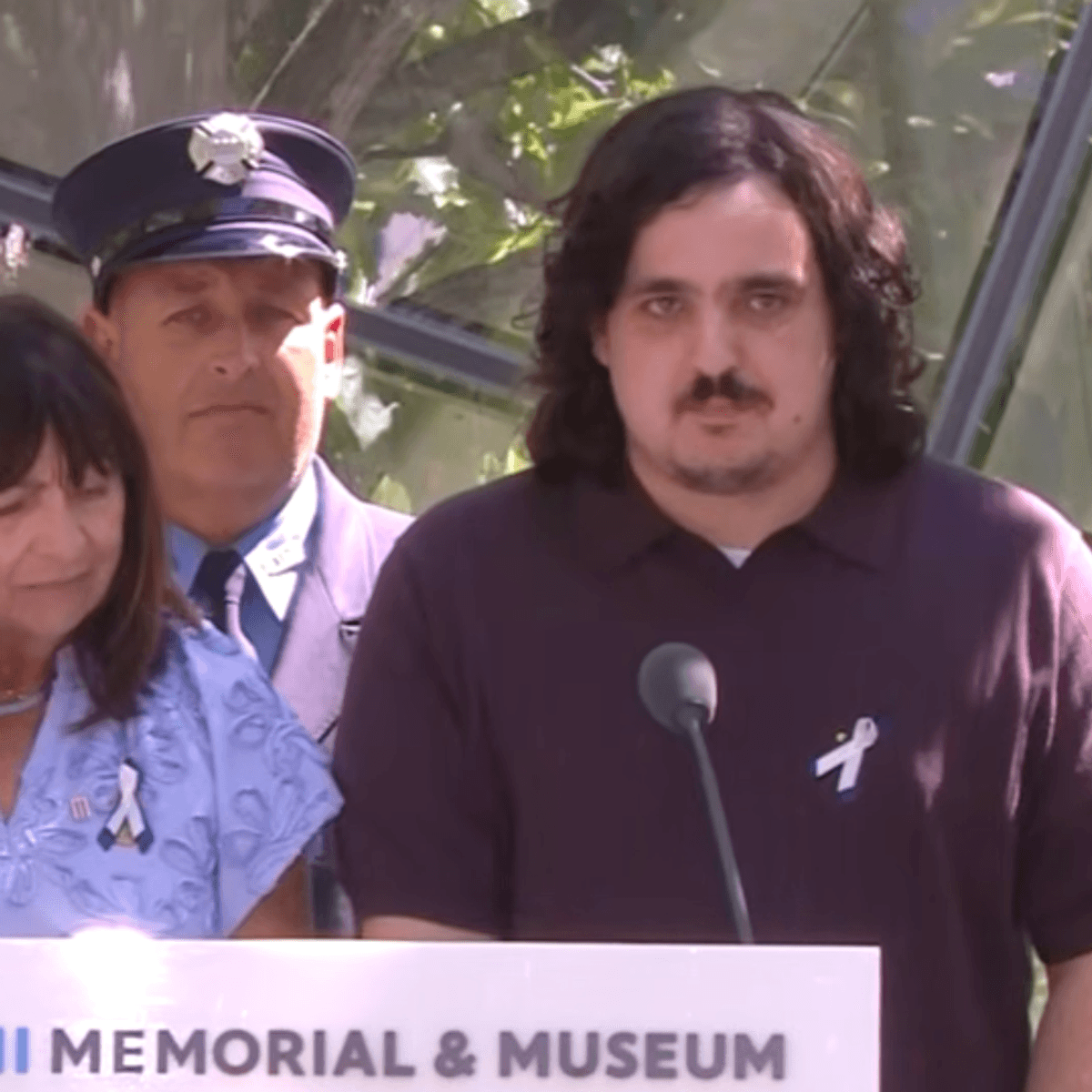
With Lower Manhattan and the site of the September 11 attacks in the background, New York City Mayor Zohran Mamdani on Friday called on people to honor the memory of the nearly 3,000 victims—as well as those who have died of illnesses stemming from toxic air at the site of the attacks—by caring “for one another” as thousands of people “cared for strangers” as the tragedy was unfolding exactly 25 years ago.
Mamdani honored the 2,753 New Yorkers—“parents and children, husbands and wives, friends and colleagues, 2,753 universes gone in an instant”—and said the city and country remember September 11 as “the darkest day” when hijackers flew airplanes into the World Trade Center and the Pentagon, and passengers aboard a fourth plane fought to stop another target from being struck.
The mayor urged viewers to remember the actions of thousands of New Yorkers in the immediate aftermath of the attack—those who donated blood and “opened their homes to those who could not get home.”
“We remember the workers who carried their colleagues down hundreds of stairs, then turned around and went back up to find someone else who needed help,” said Mamdani.
25 years ago, terrorists killed nearly 3,000 people, including 2,753 New Yorkers.
As we remember that terrible day, let us also remember the first responders, office workers and strangers who ran toward danger to help each other. Let us remember the extraordinary compassion,… pic.twitter.com/AO4RFEOZA2
On social media, as the country marked the 25th anniversary of the attacks, many users spoke about specific acts of bravery, including those of Rick Rescorla, the head of security at Morgan Stanley, who was killed at the World Trade Center after he led roughly 2,700 of his colleagues to safety.
In a separate social media post on Instagram, Mamdani highlighted several lesser-known New Yorkers who “sprang into action to help however they could,” including teachers, firefighters, sanitation workers, and healthcare providers.
His office interviewed Roseann Caruana of the city’s Department of Transportation, who described a triage center that was set up for victims, and Rashel Dorleans—now a New York City public school teacher, and a high school student at the time of the attacks.
“I think it’s a credit to the teachers that were there,” said Dorleans. “They did not seem panicked. I’m sure they were panicked on the inside, but they were kind and calm with us.”
Mamdani said that “we have a sacred obligation to those who were stolen from us to care for one another as they cared for strangers, to live lives worthy of the sacrifices they made, and to build a city worthy of their courage, a city where we run toward one another. That is how we remember.”
Ahead of the anniversary this week, the mayor released long-hidden files regarding how New York residents were misled about the toxicity of the air at the World Trade Center attack site. He said the number of people who have died thus far from related cancers and other health issues has likely surpassed the number of victims on September 11.
Mamdani was also the target of attacks this week from Republicans including former Mayor Rudy Giuliani and City Council members Vickie Paladino and Joann Ariola, who explicitly cited Mamdani’s Muslim faith as they said he did “not belong” at the September 11 memorial ceremony held on Friday.
“I’m proud to be the mayor of this city. I love this city. I love this country,” Mamdani said when asked about the racist remarks. “What I want this week to be a focus on is the families whose loved ones were stolen from them 25 years ago in the horrific act of terror of September 11, and a focus also on the first responders who did everything they could.”
The mayor was seen shaking Giuliani’s hand and speaking to him at the ceremony.
NYC Mayor Zohran Mamdani and former Mayor Rudy Giuliani shaking hands at the Sept. 11 ceremony via ABC7NY pic.twitter.com/ULUMVdx3aM
“Let us remember the extraordinary compassion, resilience, and bravery that carried our city through its darkest day,” said Mamdani. “Today, New York remembers.”
Our work is licensed under Creative Commons (CC BY-NC-ND 3.0). Feel free to republish and share widely.
Unless the West devises better economic strategies, the AfD will keep gaining ground.
The 44 percent support for the neo-Nazi Alternative for Germany (AfD) party in the small east German state of Saxony-Anhalt has produced great anxiety about the causes of a new turn to fascism in the nation that produced Hitler. Call me an economic determinist, but for the most part it’s the economy, stupid. And absent drastic changes in the global economic order and the role of China, Germany and the West are headed for much worse. This story comes in three parts. Part One: Hitler came to power due to the collapsed German economy following the draconian terms of the 1919 Treaty of Versailles. During the post–World War II boom, with over-full employment and the return of prosperity, there was virtually no support for neofascists. The far-right National Democratic Party, predecessor of the AfD, founded in 1964, whose leaders included former Nazis, never succeeded in gaining the 5 percent required for seats in the federal Bundestag. Part Two is what occurred after German reunification in 1990. The West German government, under conservative Helmut Kohl, basically bungled the economic integration of the former DDR. Communist East Germany had a state-run, command economy. Living standards were well below those of the West. On the other hand, everyone had a job and the communists were serious about good health benefits, pension plans, and child care. When I visited East Berlin in 1990 after the wall came down, several anxious people whom I interviewed used the same words: “Not everything here was bad.” Protected East Germany was soon exposed to the full force of the productive West. The Kohl government did invest in infrastructure but executed a hasty sell-off of state-owned enterprises through a transitional trust called the Treuhandanstalt. Within five years, the agency transformed a state-run economy into a private market-based model. The Treuhand privatized more than 8,000 state companies. About 60 percent were sold to private businesses; another 30 percent were liquidated; the remainder were restored to previous pre-communist owners. As an exercise in crash privatization, the conversion was a success. But the project left out one key detail: What would all the displaced workers do for a living? While the government did try to use job retraining and temporary employment in environmental cleanup and infrastructure, it was insufficient. For much of the post-unification period, unemployment in the East was about double that of the West, though lately rates have partly converged, and wages in the East have lagged wages in the West. A pertinent digression: When I was in my early twenties, I was very into photography, and my first serious camera was a Praktica. It was very inexpensive for a fine single-lens reflex camera, because it was made in East Germany. (You could buy a Praktica in the U.S. because consumer goods were exempt from the strategic embargo of Soviet bloc exports.) It wasn’t quite as good as my next camera, a far more expensive made-in-Japan Nikon, but it was more than good enough. It was, after all, German. After the war, the famous Zeiss optical company was split into a private Western company, Carl Zeiss, and an East German state-owned company, called Zeiss Jena. Among other products, Zeiss Jena made lenses for Praktica cameras. Zeiss Jena employed about 70,000 people. Today, it employs about 3,000. The company that made the cameras, Pentacon, based in Dresden, employed 6,000. It went bankrupt and employs none. With the abrupt absorption of the East German economy into the West, a lot of decent jobs for skilled workers just vanished. Some of the political reaction went far right. For others, who had benign memories of the Soviet era, it went far left.
But Part Three of the story is the most alarming—the weakness of the German economy generally. There were two important and emblematic stories out of Germany last week. The one that got the most attention was the large vote for the AfD in Saxony, and the risk that the neofascists would form the next state government. However, equally alarming was a story that got a lot less notice outside Germany. The powerful IG Metall, which represents workers at Volkswagen, agreed to the company’s request for 50,000 layoffs. The deal includes a sweeping cost-cutting plan to cut a further 50,000 positions by 2030, and the closure of four plants. The reason for VW’s woes is China’s increasing dominance of the global auto industry, which has been killing VW’s worldwide exports. For decades, Germany thrived as the Western nation that still does a lot of manufacturing, especially in high-end engineering products. But that dominance is also being undermined by the rise of China. Germany’s economic model is failing. Its real per capita growth rate was just 8 percent between 2012 and 2025. And the mainstream parties are being held responsible. And so the appeal of the AfD is heading relentlessly westward. The AfD won 20.8 percent of the vote in the national elections of 2025, up from 10.4 percent in 2021, giving it 152 seats in the 630-member Bundestag, and making it the second-largest parliamentary group and official opposition. It has gained ground in west German states. Hostility to immigrants is also definitely a factor, but a secondary one. When Germany had over-full employment during the postwar boom, the country tolerated foreign guest workers. At a time when U.S. leadership is desperately needed to work with Europe to figure out a way for China to be part of the global economy without its predatory trade policies and low wages putting the economies of other nations out of business, Donald Trump is preoccupied with vanity projects. In anticipation of Chinese President Xi’s visit next month, Trump has paid far more attention to the appearance of the White House than to strategic goals for the summit. Neither Trump nor the AfD has economic policies to get at the root of pocketbook grievances, which are only marginally related to immigration. But the more the grievances fester, the better the nationalist far right does. It’s the same story in depressed former industrial regions all over Europe and in the American Rust Belt. The West needs a better economic model—one that prizes fair trade and plentiful good jobs. If it fails, the future will look a lot like the AfD.
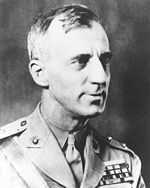
Originally printed in 1935, War Is a Racket is General Smedley Butler’s frank speech describing his role as a soldier as nothing more than serving as a puppet for big-business interests. The introduction discusses why General Butler went against the corporate war machine and how he exposed a fascist coup d’etat plot against President Franklin Roosevelt. Widely appreciated and referenced by left- and right-wingers alike, this is an extraordinary argument against war—more relevant now than ever.
Smedley Darlington Butler was a Major General in the U.S. Marine Corps, an outspoken critic of U.S. military adventurism, and, at the time of his death, the most decorated Marine in U.S. history. During his 34-year career he participated in military actions in the Philippines, China, Central America, the Caribbean during the Banana Wars, and France in World War I.
After he retired he became a well-known and outspoken critic of the US military-industrial complex and, and a popular anti-war speaker. His most well known work is his 1935 book War is a Racket, in which he described war as a money making enterprise.
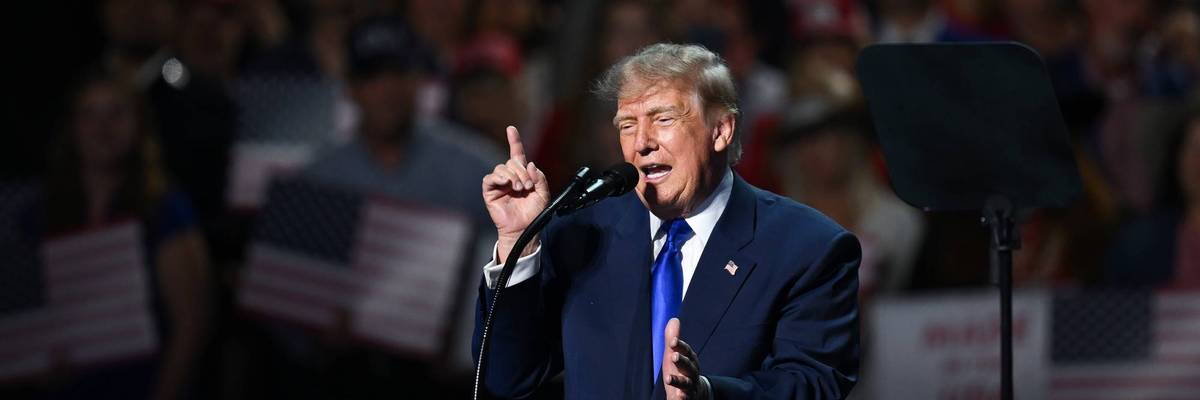
US President Donald Trump pledged on Wednesday to send every American adult a $5,000 check if Republicans keep control of Congress in the upcoming midterm elections, a promise that was widely seen as a desperate ploy to distract from a flagging economy and the destructive impacts of the Iran war.
“If the Republicans win, you win with us and you get $5,000,” Trump declared in his address to the GOP’s midterm convention in Dallas. The president, who recently railed against Medicare for All as too costly, called his proposed payment “the Trump Dividend,” but did not mention its potential price tag. Snap estimates indicate the checks, which would require congressional approval, would likely cost more than $1.3 trillion—close to the size of the discretionary federal budget.
Warren Gunnels, staff director for Sen. Bernie Sanders (I-Vt.)—the leading Medicare for All champion in Congress—derided Trump’s promise by comparing it to other campaign pledges that have not materialized.
“Yeah, just like we got a $2,000 tariff refund, a 10% cap on credit card interest rates, a 500% cut in prescription drug prices, $2 gas, oh wait…what?” Gunnels wrote on social media.
"Here is my promise, if the Republicans win the House of Representatives and the U.S Senate, both of them…because of our tremendous strength and success economically I will issue a dividend to every adult citizen in the United States of America for $5,000." pic.twitter.com/Iy7OVq5vpk
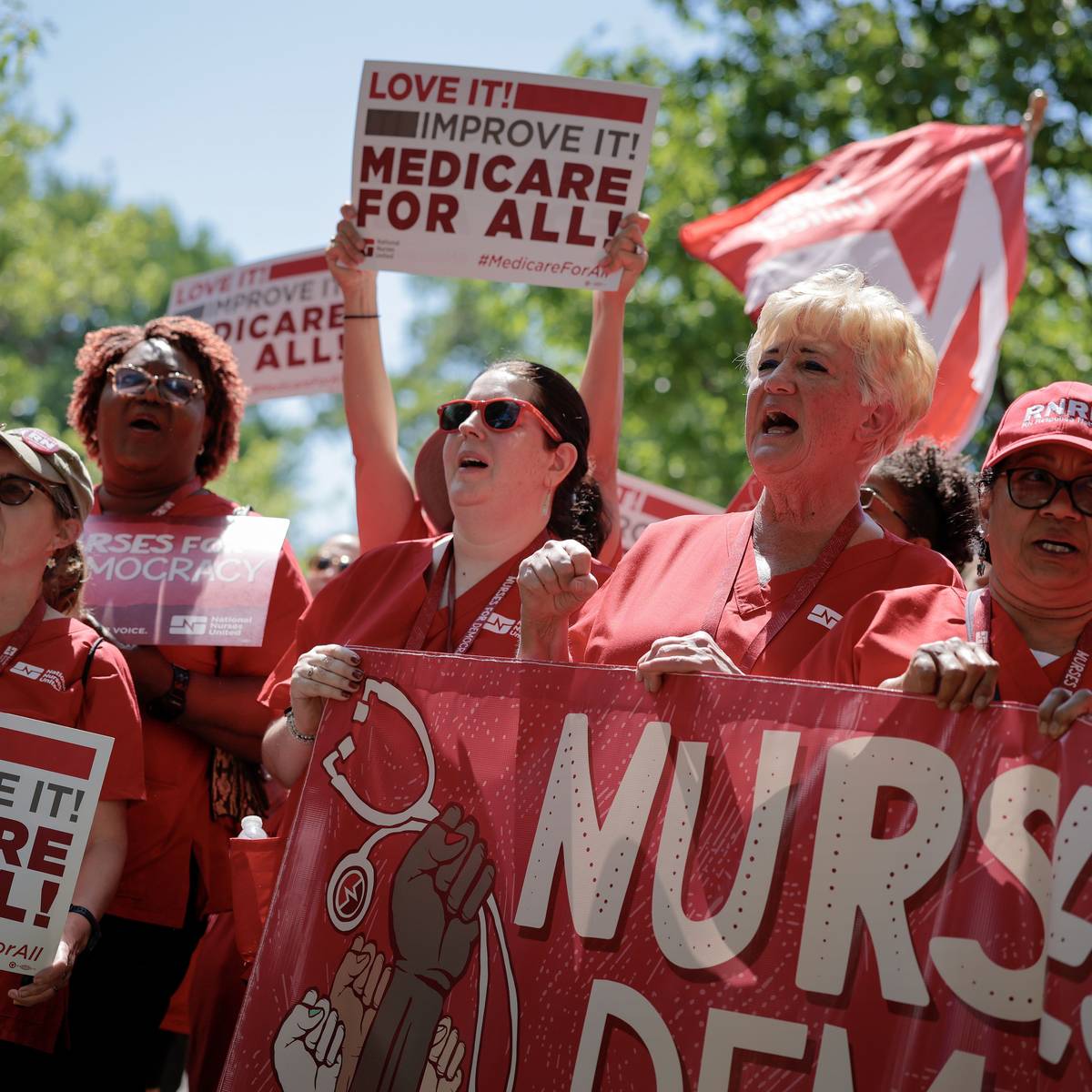
Trump’s midterm pledge came days after he responded dismissively to a reporter’s question about Medicare for All, which would provide every person in the US with comprehensive health coverage at a lower cost overall than the current, privatized system.
The president falsely claimed that a single-payer system would cost “the entire budget of the whole country.” But a recent study by researchers at Yale University estimated that Medicare for All would save the US roughly $1 trillion per year in national healthcare expenditures while also saving more than 114,000 lives annually.
Trump also suggested earlier this year that the federal government can’t afford to pay for childcare and other programs because “we’re fighting wars.”
A recent analysis by the Joint Economic Committee found that the average household in the US has had to pay an additional $3,800 on energy and other essentials since the start of Trump’s second term, in part due to the president’s decision to launch an illegal war on Iran.
The Watson School of International and Public Affairs at Brown University estimates that Trump’s war on Iran has cost US consumers over $102 billion extra, combined, on gas and diesel fuel.
Our work is licensed under Creative Commons (CC BY-NC-ND 3.0). Feel free to republish and share widely.
Occupy 2026 Sep 11, 2026 Rage against the Machine’s frontman Tom Morello with a clear challenge to make a stand for the future! Drops the stats, raises the bar and drops the mic. Time to make “the System” obsolete! Music track from Alana Orr (www.amorr.us)
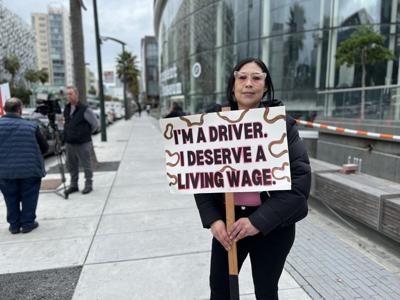
Drivers for five app-based services in San Francisco and Los Angeles earned less than those who were based in three cities outside California, according to a 2024 UC Berkeley report.Troy Wolverton/The Examiner
It’s official: Uber and Lyft drivers have formed a union.
Now comes what might be the harder part: negotiating a first contract with the San Francisco-based ride-hailing companies.
On Wednesday, the state Public Employment Relations Board certified the California Gig Workers Union — which is backed by the powerful Service Employees International Union — as drivers’ official bargaining organization.
As such, the union will be able to negotiate on their behalf on a sectoral basis, meaning it will be empowered to bargain with Uber and Lyft at the same time for a contract that will apply to drivers who work for either company or both.
The effort to form a union “took a lot of work, but there’s a lot of incentive by the drivers,” Augusto said.
“There’s a lot of motivation … they’re not too happy with Uber,” he said. “And so today is a big day.”
In a statement, Ramona Prieto, Uber’s head of public policy and communications for the western U.S., acknowledged PERB’s move as part of the process set up by the new law.
“PERB’s certification is the next step in delivering on AB 1340, a historic compromise that gives drivers a pathway to representation while preserving the independence and flexibility they’ve consistently said they value most,” Prieto said.
In a separate statement, Lyft spokesman CJ Macklin said the company would negotiate in good faith with the union.
“Lyft does well when drivers do well, and we’ll stay focused on helping drivers succeed while keeping rideshare affordable and dependable for everyone who counts on it,” he said.
PERB’s certification of CGWU was expected. The agency determined last month that the union had shown that it had the support of 30% of active drivers — defined as those who, among all ride-hail drivers in the state, had given at least the median number of rides during the most recent six-month period.
Following that determination, CGWU was set to become the certified bargaining unit unless a group representing at least 30% of active drivers who opposed unionization came forward and demanded a vote within 30 days.
No such group stepped forward during that window, PERB said in its certification document.
CGWU will represent not only the state’s 100,307 active drivers, but everyone who drives for Uber and Lyft, which account for 99.2% of all ride-hail rides in California, according to PERB data. It’s unclear exactly how many drivers that is.
In the first six months of the year, a combined total of 200,533 drivers for Uber and Lyft gave at least 20 rides, according to Joseph Eckhart, PERB’s acting general counsel. The companies weren’t required to disclose to the agency how many drivers gave fewer rides than that during the period.
Including those drivers, SEIU estimates CGWU will represent about 300,000 to 350,000 drivers total, said Cecille Isidro, the union’s spokeswoman. Those numbers would likely make the organization one of the largest unions in the state.
Under AB 1340, the union can now request to begin negotiations. CGWU expects negotiations to start by the end of the year, Augusto said.
But first, he said, the union plans to survey and hold meetings with drivers to understand their chief grievances and what the organization should prioritize in negotiations. CGWU also plans to train negotiators, he said.
While the union still has to do that research, Augusto said, he has a sense about what drivers are going to demand from talking with them.
Drivers have complained that since the companies adopted algorithmic pricing several years ago, their pay has plunged.
A study from the UC Berkeley Labor Center two years ago found that, when taking into account mileage expenses, waiting time and the cost of benefits they’d get if they were actual employees from the companies, drivers made about $7.63 per hour. At the time of the report, San Francisco’s minimum wage was $16.32 per hour.
For his part, Augusto said, he’d like to see a return to a rate-card system, in which all drivers are paid the same amount per mile and per minute of driving, to account for their investments in their cars and their time.
In addition to pay, another likely demand in negotiations will be that the companies provide a better system for drivers to challenge deactivations, he said.
Drivers have charged that when Uber and Lyft deactivate them — making it so they can no longer use their apps to drive for pay — they often are given little to no explanation and have no way to appeal the decision to a human being. Instead, their challenges are typically handled by automated systems.
Earlier this year, the advocacy group Rideshare Drivers United sued Uber, alleging that the company’s deactivation appeals process didn’t meet the requirements of Proposition 22, a law passed by voters in 2020.
That law designates drivers as independent contractors, rather than employees of Uber and Lyft, if the companies meet certain obligations — including having appeals processes for terminations.
In its lawsuit, RDU argues that because Uber doesn’t offer a “bona fide” appeals process, the company shouldn’t be able to treat drivers as independent contractors.
Pay and deactivations “are the two priorities we’re going to fix,” Augusto said.
Even though the legislation requires both sides to bargain in good faith, those negotiations — once they begin — could take well over a year or more to reach a final agreement under the timeline laid out within it.
The law gives the two sides 210 days to reach an agreement before one or the other can ask PERB to refer them to a mediator. It then allows them up to 22 days to agree on a mediator. After that, the legislation provides them up to 75 days to reach an agreement through mediation.
If they can’t strike a deal, either side can next request that PERB refer them to an arbitrator. The arbitrator has up to 105 days after that to meet with the parties and issue a recommended settlement.
Twenty days later, if the companies haven’t accepted the arbitrator’s recommended deal and the two sides haven’t reached an agreement on their own, the union can ask PERB to approve the deal unilaterally.
PERB’s general counsel has 60 days from then to review the settlement and make his own recommendation to the agency’s board. The board has up to 21 days after getting the recommendation to approve or disapprove the settlement.
If you have a tip about tech, startups or the venture industry, contact Troy Wolverton at twolverton@sfexaminer.com or via text or Signal at (415) 515-5594.
Bill McKibben is a prominent American environmentalist, author, and grassroots activist who is widely recognized for his pioneering work on climate change. He wrote The End of Nature (1989), which is regarded as the first book for a general audience about global warming.
He also co-founded 350.org, the first global grassroots climate campaign, and later launched Third Act, an organization that mobilizes Americans over the age of 60 to advocate for climate and racial justice.
Our 15th Anniversary!
Were this to be framed in marriage terms, Occupy will be celebrating its Crystal Anniversary. Quite fitting, actually, as it symbolizes clarity, transparency and enduring strength. We were very clear in our mission – wrongs need to be righted, transparency was needed in the banking and financial world, and the 1% had to be challenged. Our strength then, as it is now for any progressive movement, is our community.
Occupy Wall St – The Revolution Is Love w Charles Eisenstein
Today? The world has changed in unexpected ways since 2011: significantly increased economic disparity, accelerated social divide, voter intimidation and suppression, forever wars, resurgence of populism and fascism, Big Tech aligned with billionaires, and a government that doesn’t even pretend to care about the everyday American, much less our Constitution.
Let us make ourselves clear: Occupy is here not just to celebrate our successes, but to help replicate them; not just pass the baton, but step up to help fill the ranks of today’s activist organizations. Let’s get started…
Was Occupy Wall Street a failure? Exactly what successes can we claim? Explore our legacy, impact, how our DNA showed up in the movements that followed.
Copyleft 2026 – Occupy 2026 Original content on this site is licensed under Creative Commons Attribution-ShareAlike 4.0 International (CC BY-SA 4.0) unless otherwise noted. Any content used or mentioned from external sources remains the property of its respective creators.
We protest Heritage Foundation EVERY MONDAY (Join us!!!!) By admin | September 2, 2025 | Uncategorized Cliff Cash Comedy Premiered Jul 26, 2025 Every Monday at The Heritage Foundation 214 Massachusetts Ave. Washington D.C. 4pm protest 6pm pizza Every Friday at Fox News D.C. 400 N. Capitol St. Washington D.C. 4pm protest 6pm pizza We are... Continue reading →
There are less than 9 weeks until the critical November election, and what we do between now and then will shape the future of our health care. We started Nurses for Democracy to fight back against fascism and protect our democracy, but also to elect candidates in key races who are committed... Continue reading →
September General Membership Meeting *We will be voting on November Election endorsements for state propositions!* Date: Tuesday, 15 September, 2026 (third Tuesday of month) Time: 7-9 PM *NEW* In-person Location: Women’s Building (3543 18th St), Audre Lorde Room Remote: Via Zoom Link Here
Join us in person for a deep discussion on the upcoming November election. We’ll break down what’s on the ballot, why it matters, what you need to know before you vote. Featuring: Juliet Williams, CalMatters Ben Trefny, KALW Public Media Lila LaHood, San Francisco Public Press This election is pivotal.... Continue reading →
One Million Rising: Strategic Non-Cooperation to Fight Authoritarianism Virtual Event · Hosted by No Kings Time Wednesdays 8 – 9:30pm EDT Location Virtual event Join from anywhere About this event Across the country, authoritarian forces are getting bolder and more dangerous. Trump and his allies are not hiding their agenda: mass deportations,... Continue reading →
13th anniversary of Occupy Wall Street and Occupy San Francisco By admin | September 17, 2024 | Uncategorized Leave a comment (newlaborforum.cuny.edu) Occupy Wall Street (OWS) was a left-wing populist movement against economic inequality, corporate greed, big finance, and the influence of money in politics that began in Zuccotti Park, located in New York City’s... Continue reading →
Skip to content 15th Anniversary of Occupy Wall Street 15th Anniversary of Occupy Wall Street September 17 – September 20 We are organizing a celebration for the 15th anniversary of Occupy Wall Street, scheduled for September 17, 2026, at Zuccotti Park. The event aims to acknowledge past successes, pass the “torch” to contemporary... Continue reading →
THURSDAY, JUNE 29, 2023 AT 2 AM – 4 AM PDT How to create trust in a group? Details Event by Extinction Rebellion Empathy Circles online EMPATHY CAFE Duration: 2 hr Public · Anyone on or off Facebook How to create trust in a group? This is the question that arose in our... Continue reading →
Skip to content 15th Anniversary of Occupy Wall Street 15th Anniversary of Occupy Wall Street September 17 – September 20 We are organizing a celebration for the 15th anniversary of Occupy Wall Street, scheduled for September 17, 2026, at Zuccotti Park. The event aims to acknowledge past successes, pass the “torch” to contemporary... Continue reading →
Skip to content 15th Anniversary of Occupy Wall Street 15th Anniversary of Occupy Wall Street September 17 – September 20 We are organizing a celebration for the 15th anniversary of Occupy Wall Street, scheduled for September 17, 2026, at Zuccotti Park. The event aims to acknowledge past successes, pass the “torch” to contemporary... Continue reading →




 Robert Kuttner